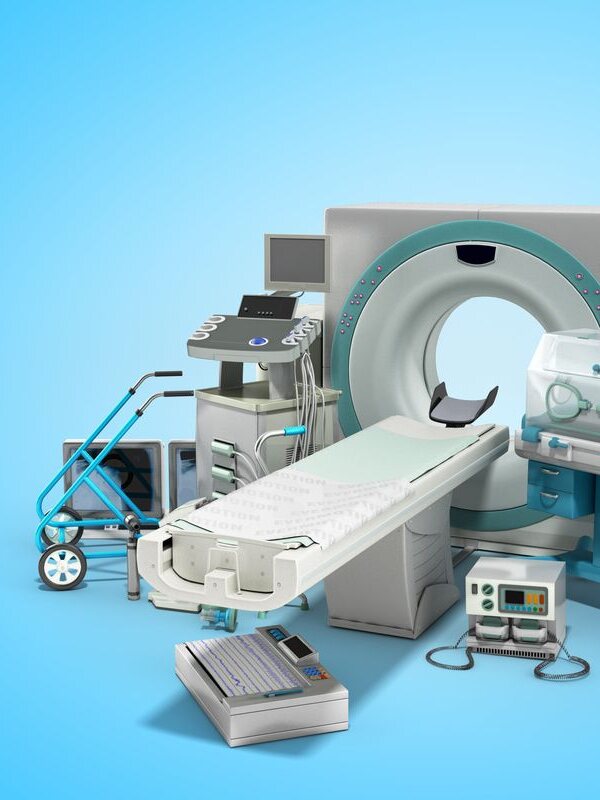
What Home Medical Devices Covers
The buyers are equipment manufacturers, who need extreme safety, zero user maintenance and near-zero after-sales — because the users are elderly patients who will not read manuals, and any failure becomes a safety incident and a brand crisis. PLB LiFePO₄ does not fire or explode even under nail penetration, self-discharges less than 3% a month, carries five-layer BMS protection and is 60% smaller at one third of the lead-acid weight.
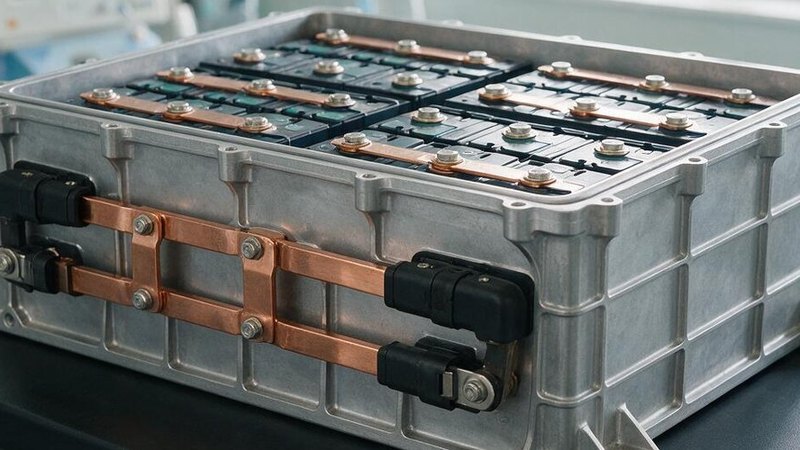
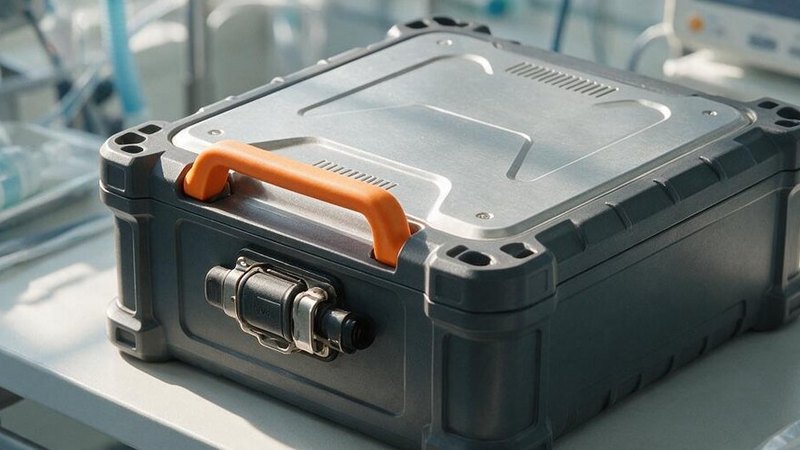
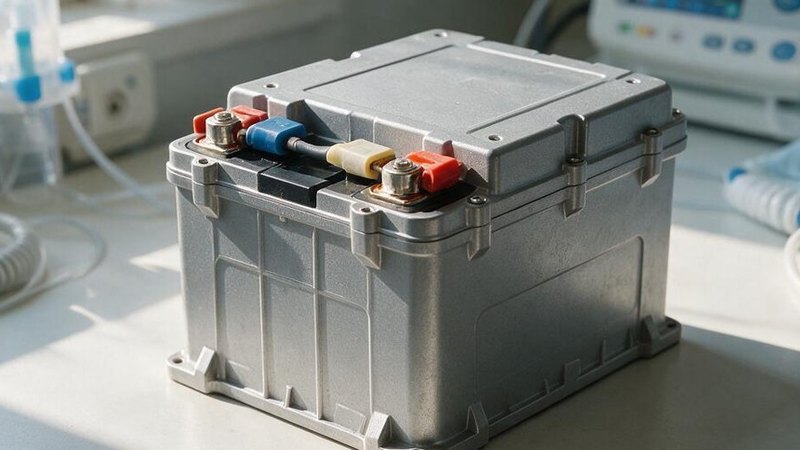
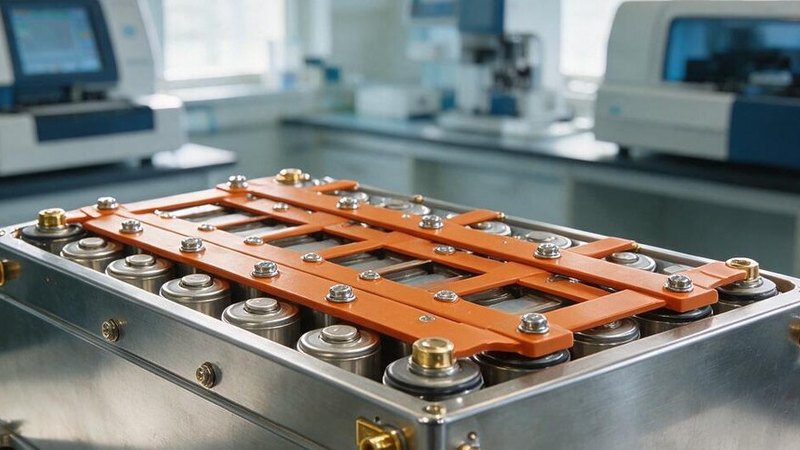
Professional Battery Solutions
End Users Fear Lithium Fire — How Can Manufacturers Answer the Safety Question?
Home medical devices sell to consumers, and news of lithium battery fires weighs heavily on purchase decisions. Elderly users associate lithium with phone fires, and a manufacturer choosing ternary lithium takes on that risk directly.
PLB removes the safety-incident risk for the brand and lowers product insurance rates. LiFePO₄ does not fire or explode under nail penetration, overcharge, short circuit or crush, and five-layer BMS protection cuts any anomaly automatically — the most persuasive selling point for end users.
| Ternary lithium | PLB LiFePO₄ | |
|---|---|---|
| Nail penetration test | Fires, dangerous | No fire |
| Overcharge safety | High risk | BMS cuts off |
| Brand risk | High | Very low |
| Product insurance | High | Lower |
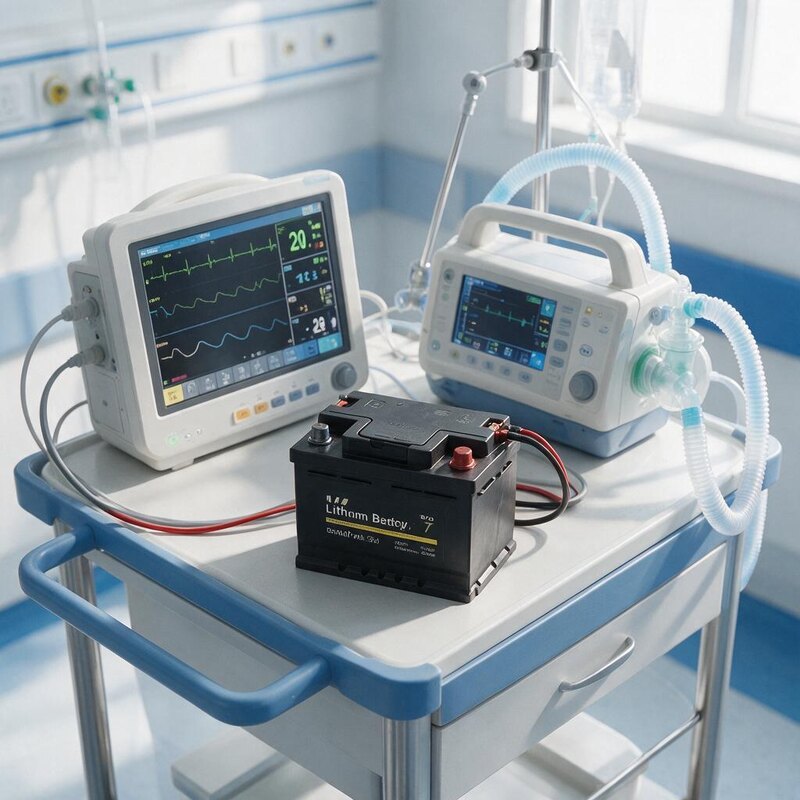
Battery Dies in Storage — How to Reduce the After-Sales Rate?
The pain is specific: Battery Dies in Storage — How to Reduce the After-Sales Rate? In daily operation, lead-acid or manually managed packs lose capacity between scheduled checks, maintenance teams cannot inspect every unit, and the failure surfaces only when the load is already at risk.
Monthly self-discharge below 3% means more than 90% remains after three months, so storage damage falls to near zero. PLB's LiFePO₄ pack and BMS monitor cell voltage, temperature and SOC continuously, alert before a weak cell becomes a failure, and are sized to the application's load profile.
| Conventional / manual | PLB LiFePO₄ | |
|---|---|---|
| Monitoring | Periodic checks | Continuous BMS |
| Fault warning | At failure | Threshold alerts |
| Maintenance | Scheduled visits | Exception-based |
| Service life | 2–3 years | 6,000+ cycles |
Bulky Equipment — How Does Lightweighting Improve Competitiveness?
Home medical devices go into households with limited space, mostly for elderly users. A lead-acid 12V20Ah battery weighs about 8 kg, and in side-by-side product comparisons the smaller, lighter device wins.
60% less volume at one third of the weight: about 2.5 kg against 8 kg. The compact pack fits a bedside table, one hand can swap it, “lightweight” becomes a high-frequency keyword in e-commerce reviews and returns fall sharply.
| Lead-acid | PLB LiFePO₄ | |
|---|---|---|
| Weight | About 8 kg | About 2.5 kg |
| Volume | Large | 60% smaller |
| E-commerce keyword | Rarely “lightweight” | “Lightweight” appears often |
| Return reason | Bulky, hard to replace | Greatly reduced |
Zero Learning Curve — How to Reduce “Misuse” After-Sales?
Home device users are elderly patients who do not read battery manuals. Lead-acid needs regular topping up and attention to charge parameters, and misuse accounts for more than 30% of after-sales cases — with a service desk to match.
A dedicated charger means plug in and charge with automatic cut-off when full, and the BMS manages every parameter. The user does one thing — plug it in. Misuse after-sales falls by more than 90% and customer service cost falls with it.
| Lead-acid | PLB with charger | |
|---|---|---|
| Steps to operate | Parameters must be set | Plug in and charge |
| Risk of misuse | High | Zero |
| “Misuse” after-sales | 30%+ of cases | Near zero |
| Service cost | High | Very low |
Solution Advantages
5-Layer Safety, No Fire
LiFePO₄ plus five-layer BMS protection
LiFePO₄ does not fire under nail penetration, and five-layer BMS protection removes brand safety-incident risk — a safety level far above ternary lithium, with lower product insurance rates.
Far above ternary lithium · Lower insurance ratesBelow 3% Monthly Self-Discharge
Over 90% left after three months
Monthly self-discharge below 3% leaves more than 90% after three months of storage, so storage-damage after-sales falls to near zero — install and forget for five years.
Lower return rate · Higher satisfactionCompact 2.5 kg
60% smaller, one third the weight
60% less volume at one third of the lead-acid weight — about 2.5 kg for 12V20Ah. It fits a bedside table, one hand can replace it, and lightweight is a top e-commerce keyword.
Fits a bedside table · Single-hand replacementZero Learning Curve
Plug in and charge, auto-stop
A dedicated charger means plug in and charge with automatic cut-off, and the BMS handles every parameter. Misuse after-sales drops by more than 90% and service cost falls with it.
No manual needed · Service cost down sharplyFrom Selection to After-Sales — PLB Stays With You
Four commitments that apply to every page in this category, from the first technical question to long-term support.

Technical Selection Support
Engineer recommends within 24 hours
Tell us the device type, load profile and space limits — our engineers size the pack and recommend the matching model within 24 hours.
Dedicated technical team · 24-hour response
OEM / ODM Customization
From cell to cabinet, fully customizable
From cells, BMS, housing and terminals to the nameplate, everything can be customized.
4–8 week customization · Tooling development supported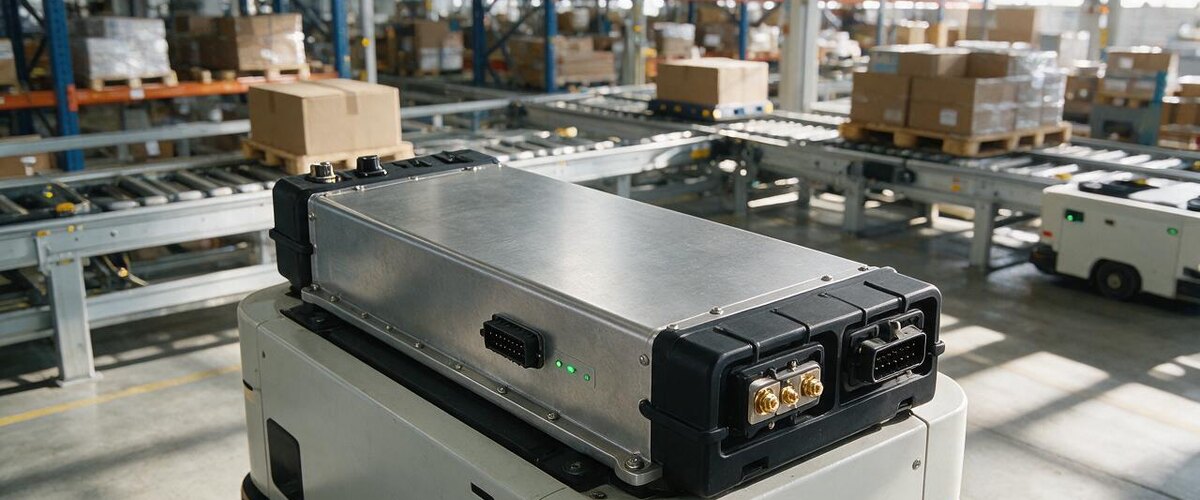
Global Shipping
Export to 100+ countries
Export-compliant packaging with UN 38.3 air transport certification and worldwide delivery.
UN 38.3 certified · MSDS available · Export compliant
Warranty & Support
Standard warranty, lifetime support
Standard products carry a full warranty, backed by lifetime technical support.
Warranty terms on request · Lifetime technical supportWhy Choose PLB?
Years of Manufacturing
Founded in Dongguan, China in 2014
Countries Served
Export-compliant packaging and worldwide delivery
Voltage Platforms
From 25.6V to 512V, built on the same cell platform
After-Sales Rate
Monitored by the internal quality traceability system
Full Range & Model Selection
Complete product range and model selection — 12V packs from 20Ah for home devices to 100Ah for imaging, plus wide-temperature versions for extreme-climate rescue.
| Model | Voltage | Capacity | Weight | Applications |
|---|---|---|---|---|
| LL-MED-12V20Ah | 12V | 20Ah | ~2.5 kg, 60% smaller | Home devices · monitoring |
| LL-MED-12V30Ah | 12V | 30Ah | ~3.5 kg, laser welded | Ambulance · transfer equipment |
| LL-MED-12V30Ah-W | 12V | 30Ah | −20~60 °C, 85% at −20 °C | Extreme-temperature rescue |
| LL-MED-12V40Ah | 12V | 40Ah | Hot-swap option | Operating · surgical devices |
| LL-MED-12V50Ah | 12V | 50Ah | RS485 / CAN, IEC 60601-1 | Life support · ICU |
| LL-MED-12V60Ah | 12V | 60Ah | Full certification set | IVD · analyzers |
| LL-MED-12V100Ah | 12V | 100Ah | Custom enclosure | Imaging equipment |
By application: home devices → LL-MED-12V20Ah.
By environment: standard indoor → standard series.
Not sure? Send us the device type, load profile and space limits — our engineers will size the pack directly.
Frequently Asked Questions
The questions medical device manufacturers ask most about LiFePO₄ medical packs in the Home Medical Devices scenario, and what it takes to qualify.
Will a PLB pack replace the lead-acid unit in the Home Medical Devices scenario without rework?
The pack keeps the SLA envelope and connector so the device needs no mechanical change, and the documentation package supports the device file. Typical models for Home Medical Devices builds are LL-MED-12V20Ah and LL-MED-12V20Ah + matching charger.
What runtime and output can we expect over a procedure in the Home Medical Devices scenario?
Power quality is the design target: low internal resistance keeps voltage sag inside the device tolerance and avoids resets or interrupted cycles during peak load.
What temperature and ingress rating is specified for the Home Medical Devices scenario?
The pack is built for continuous device duty with BMS protection and thermal limits matched to the enclosure. It also removes 2.5 kg of weight against the lead-acid unit.
Can the pack report SOC and alarms to monitoring already used in the Home Medical Devices scenario?
RS485 and CAN report SOC, voltage, current and temperature, with a 20% alarm and a 10% emergency protocol for hospital integration.
Which models cover the Home Medical Devices scenario, and how is delivery handled?
Typical models are LL-MED-12V20Ah and LL-MED-12V20Ah + matching charger. Custom packs take 4–8 weeks including tooling, and lead time for standard models is confirmed on the quotation. Tell us the device type, load profile and space limits — our engineers size the pack and recommend the matching model within 24 hours.
Need a Selection Recommendation?
Tell us the load, backup time and installation space — our engineers will recommend the matching battery within 24 hours.
NDA available upon request · Typical response within 12 hours