What Telecom Macro Base Station UPS Covers
All three major Chinese carriers are pursuing "lithium replacing lead-acid + peak-shaving" dual cost-reduction strategies. China Mobile's 2025 new-build lithium target exceeds 80%; China Telecom and Unicom follow. For provincial network departments and group procurement leads, the question is "how much does network-wide TCO actually save" and "can it meet 4H+ enterprise standard backup." PLB, founded 2014, serves operators in 100+ countries. 3x energy density vs. lead-acid, ≥95% efficiency with smart peak-shaving saves ¥1,500+/site/year. 5-year maintenance-free, 60% lower network-wide TCO.
Professional Battery Solutions
Operators Demand 4H+ Backup — Lead-Acid Takes Half the Room, What Now?
Operator enterprise standards require ≥4-hour backup. Meeting this with lead-acid needs 8-12 parallel 100Ah groups at 800kg+. Many rooms have floor loading capacity of only 300–500kg/㎡ — 800kg batteries exceed limits. Property owners reject deployment; site rejection rate up to 60%. Even if installed, lead-acid drops to 60% in 3 years — 4th year backup fails 4-hour standard, operator KPI penalty.
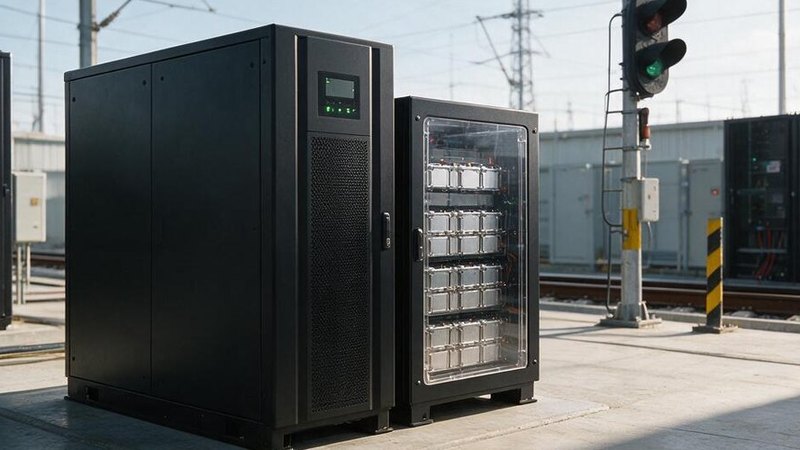
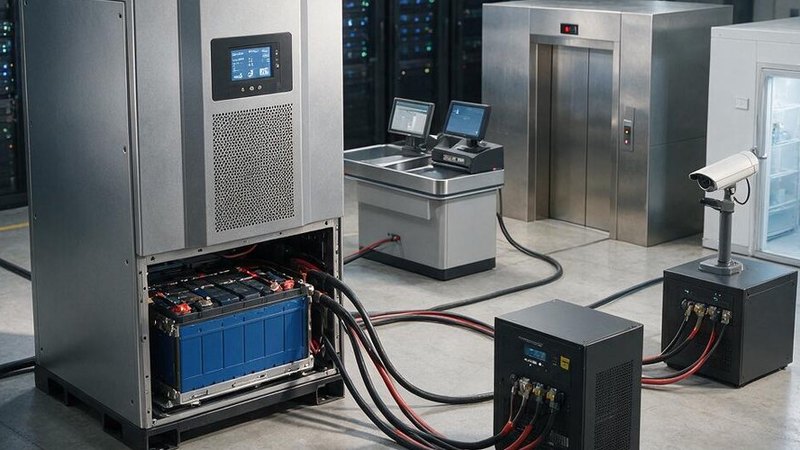
Property approval rate jumps from 40% to 95%, dramatically reducing site rejection. PLB LL-UPS48200 at 3x energy density — same 4-hour backup at 1/3 the volume, weight dropping from 800kg to 180kg. Two parallel units meet 4-hour needs. Floor loading drops from 800kg/㎡ to 200kg/㎡.
| Lead-acid | PLB LiFePO₄ | |
|---|---|---|
| Battery weight | 800 kg+ | 180 kg |
| Floor loading | 800 kg/m² | 200 kg/m² |
| Site approval rate | 40% | 95% |
| Backup at year 4 | Below 60%, fails | 90%+, compliant |
40% 5G Base Station Electricity Is 40% of OpEx — How Does Peak-Shaving Save Money?
The pain is specific: 40% 5G Base Station Electricity Is 40% of OpEx — How Does Peak-Shaving Save Money? In daily operation, lead-acid or manually managed packs lose capacity between scheduled checks, maintenance teams cannot inspect every unit, and the failure surfaces only when the load is already at risk.
Single site saves ¥1,500–2,000/year; network-wide 30,000 sites save ¥45–60M/year. PLB's LiFePO₄ pack and BMS monitor cell voltage, temperature and SOC continuously, alert before a weak cell becomes a failure, and are sized to the application's load profile.
| Conventional / manual | PLB LiFePO₄ | |
|---|---|---|
| Monitoring | Periodic checks | Continuous BMS |
| Fault warning | At failure | Threshold alerts |
| Maintenance | Scheduled visits | Exception-based |
| Service life | 2–3 years | 6,000+ cycles |
Tens of Thousands of Stations — Manual Battery Inspection Can't Keep Up
A single city has hundreds of base stations; a province has thousands. Lead-acid requires quarterly inspection — 3 people need a full year for one provincial round. Between inspections, sudden failures cause site outages, KPI penalties. Annual inspection labor costs exceed ¥2M — groups want to cut this yearly but can't under lead-acid.
Annual maintenance drops from ¥2M to ¥200K — 90% reduction. 3 staff manage 3,000 stations — 10x efficiency. PLB BMS with standard 4G aggregates all base station status to provincial NOC. Real-time SOC/SOH/temperature/fault codes with automated alerts. Precise work orders eliminate blind inspections.
| Lead-acid | PLB 4G version | |
|---|---|---|
| Inspection method | Manual rounds | 4G remote monitoring |
| Stations covered by 3 staff | A few hundred | 3,000 |
| Annual O&M cost | Baseline | 90% lower |
| Spare-part dispatch | Guesswork | Precise |
Solution Advantages
3× Density
1/3 volume, 1/4 weight vs lead-acid
In-house 26650 cell lines and a high-energy-density formulation cut volume by 70% and weight by 75% at the same capacity, lifting site approval rates to 95% and removing site rejections.
In-house cell lines · 26650 high-energy density · 12+ years of cell R&DPeak-Shaving
≥95% efficiency, ¥1,500+/site/year savings
An in-house BMS algorithm charges in the low-tariff window and discharges at peak with 95% or more efficiency, recovering the investment in half a year and saving ¥45M+ a year across 30,000 sites.
Own BMS algorithm · 95%+ efficiency · ¥45M+ saved network-wideRemote
Real-time NOC monitoring, 10x efficiency
4G monitoring integrates with operator network management systems in more than 100 countries, letting three staff manage 3,000 sites and cutting O&M cost by 90%.
100+ operator integrations · 4G standard · Precise dispatch5-Year Life
60% lower TCO network-wide
Every cell is cycle-tested to 4,000+ cycles under a ten-year quality system, cutting network TCO by 60% and removing replacement and maintenance for five years.
4,000+ cycle tested · 90%+ backup retention at 5 years · Network-wide consistencyFrom Selection to After-Sales — PLB Stays With You
Four commitments that apply to every page in this category, from the first technical question to long-term support.

Technical Selection Support
Engineer recommends within 24 hours
Tell us the load profile, backup time and installation space — our engineers size the pack and recommend the matching model within 24 hours.
Dedicated technical team · 24-hour response
OEM / ODM Customization
From cell to cabinet, fully customizable
From cells, BMS, housing and terminals to the nameplate, everything can be customized.
4–8 week customization · Tooling development supported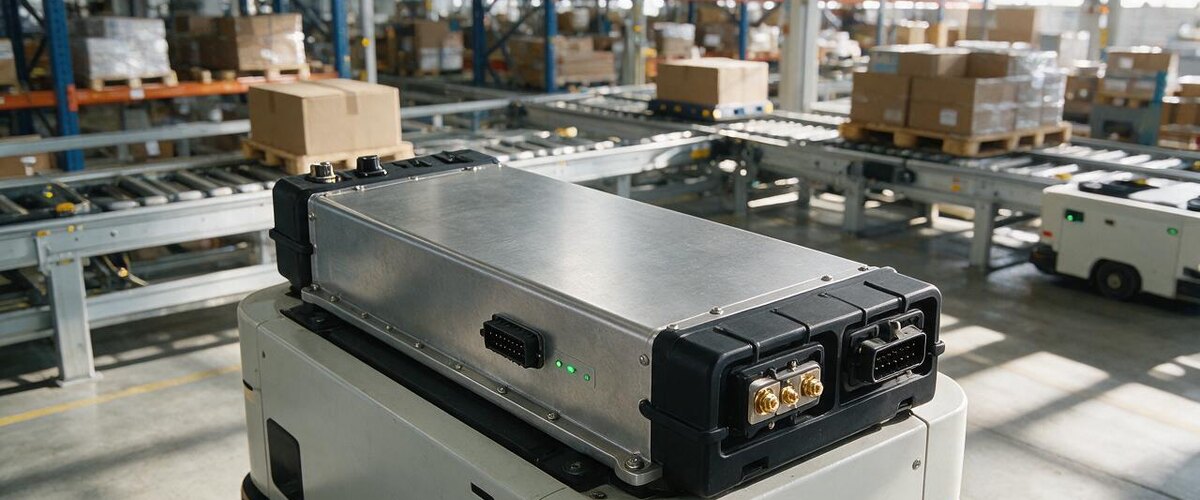
Global Shipping
Export to 100+ countries
Export-compliant packaging with UN 38.3 air transport certification and worldwide delivery.
UN 38.3 certified · MSDS available · Export compliant
Warranty & Support
Standard warranty, lifetime support
Standard products carry a full warranty, backed by lifetime technical support.
Warranty terms on request · Lifetime technical supportWhy Choose PLB?
Years of Manufacturing
Founded in Dongguan, China in 2014
Countries Served
Export-compliant packaging and worldwide delivery
Voltage Platforms
From 25.6V to 512V, built on the same cell platform
After-Sales Rate
Monitored by the internal quality traceability system
Full Range & Model Selection
Complete product range and model selection — rack modules for data halls, cabinet packs for industrial rooms and outdoor packs for telecom sites.
| Model | Voltage | Capacity | Continuous current | Form factor | Applications |
|---|---|---|---|---|---|
| 25.6V 50Ah | 25.6V | 50Ah | 50A | Module | Small control rooms · edge cabinets |
| 25.6V 100Ah | 25.6V | 100Ah | 100A | Module / rack | Industrial UPS · small data rooms |
| 48V 100Ah | 48V | 100Ah | 100A | 19-inch 3U | Telecom sites · edge data centers |
| 51.2V 200Ah | 51.2V | 200Ah | 200A | 19-inch rack | Data center UPS · colocation |
| 512V 100Ah | 512V | 100Ah | 500A | Cabinet | Large UPS rooms · 1–800kVA systems |
By system size: up to 10kVA → 25.6V modules.
By environment: Data hall → 19-inch rack modules.
Not sure? Send us the load profile and required backup time — our engineers will size the system directly.
Frequently Asked Questions
The questions UPS buyers and facilities engineers ask most about LiFePO₄ UPS modules in the Telecom Macro Base Stations scenario — 95%+ (cycle efficiency) and 4 h+ (backup duration), and what it takes to qualify.
What has to change on the cabinet before a LiFePO₄ pack goes into the Telecom Macro Base Stations scenario?
Modules are sized to common lead-acid blocks and cabinet voltages (25.6 V, 48 V, 51.2 V, 512 V) with the same terminal layout and 19-inch or cabinet mounting, so the string, breaker and charger settings carry over. Typical models for Telecom Macro Base Stations builds are LL-UPS48200 and LL-UPS48200-4G.
Does output stay flat through a whole Telecom Macro Base Stations backup window?
At equal nominal capacity the LiFePO₄ pack delivers roughly 90% usable energy against about 60% for lead-acid, and 2C high-rate discharge covers the short backup window without derating. Key figure: 4 h+ (backup duration).
How is the pack sealed and thermally managed in Telecom Macro Base Stations duty?
The standard series is rated −10 °C to 50 °C and the low-temperature D-series −20 °C to 60 °C, with BMS thermal protection in both. Endurance: 95%+ (cycle efficiency).
Is a special charger needed in the Telecom Macro Base Stations scenario?
No special charger is required: the BMS limits charge voltage and current, so the existing UPS charger works inside the recommended window.
What warranty and after-sales support apply in the Telecom Macro Base Stations scenario?
Standard products carry a full warranty backed by lifetime technical support, with terms confirmed on the quotation; export packing is UN 38.3-certified with MSDS. Tell us the load profile, backup time and installation space — our engineers size the pack and recommend the matching model within 24 hours.
Need a Selection Recommendation?
Tell us the load, backup time and installation space — our engineers will recommend the matching battery within 24 hours.
NDA available upon request · Typical response within 12 hours