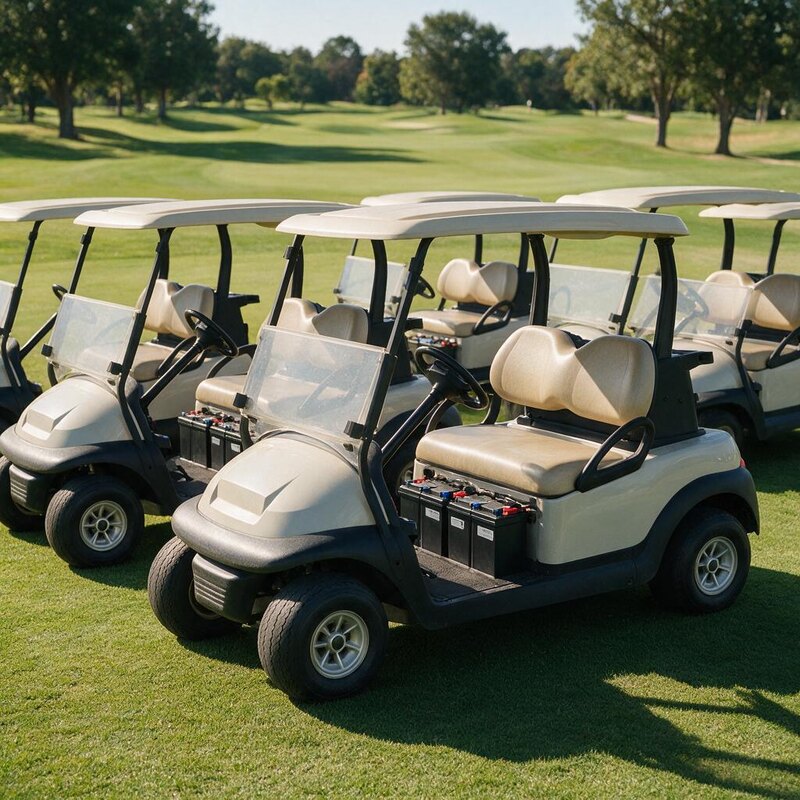
What Security & Patrol Cart Battery Covers
Core challenge: 24-hour shifts + auxiliary equipment (lights/radios/cameras/searchlights) drawing 2-3x power. Lead-acid dies before shift change, can't fully charge in 8-hour gap. For security operators, patrol blind spots = security vulnerabilities = accident liability. Battery reliability is not a cost item — it's a security assurance item. PLB: 150Ah sustains all-day auxiliary loads, 2-hour fast charging fills during shift change, multi-output panel. Failure rate <0.1% — security-critical scenarios never fail.
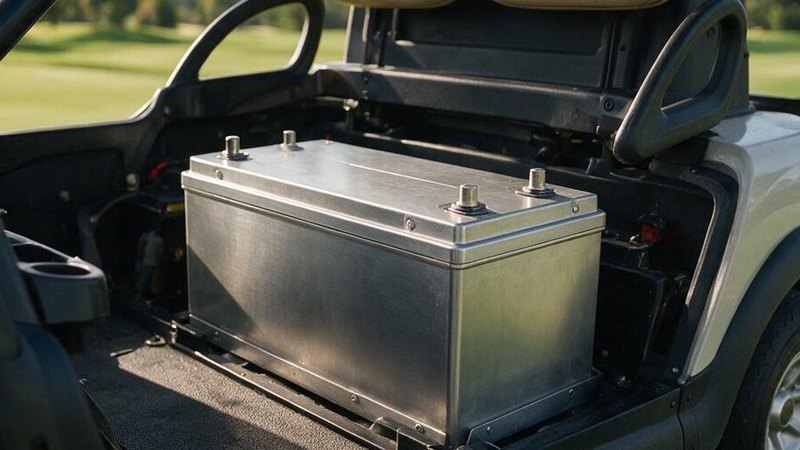
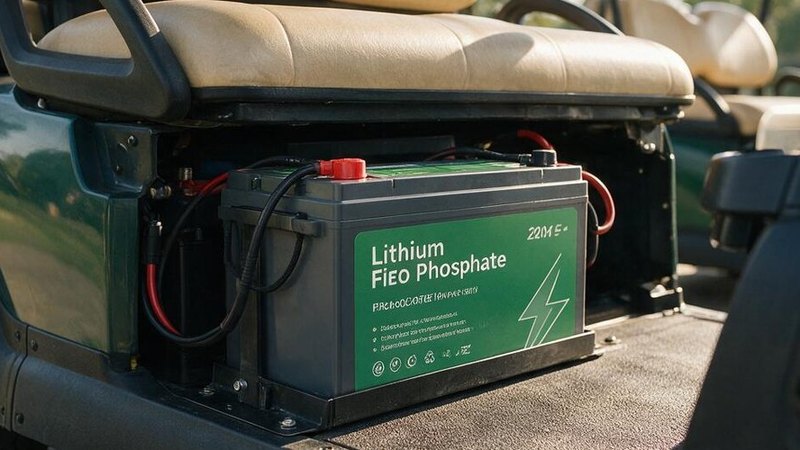
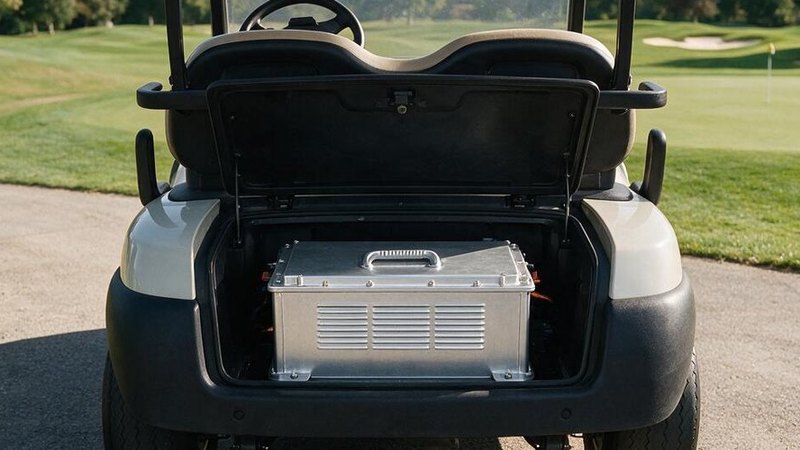
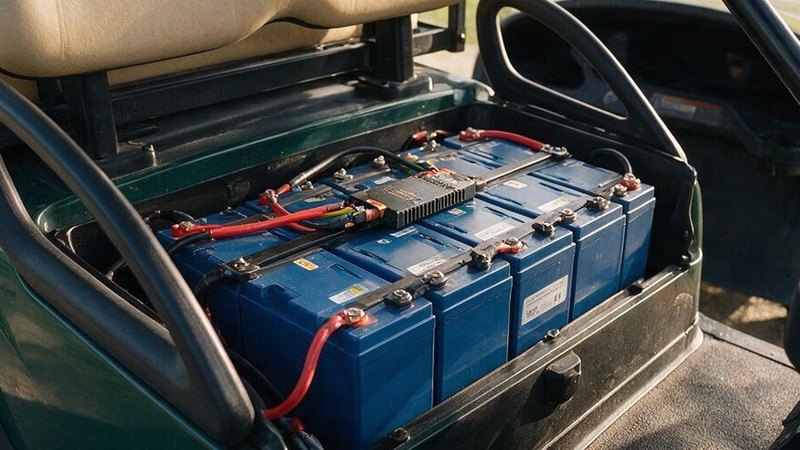
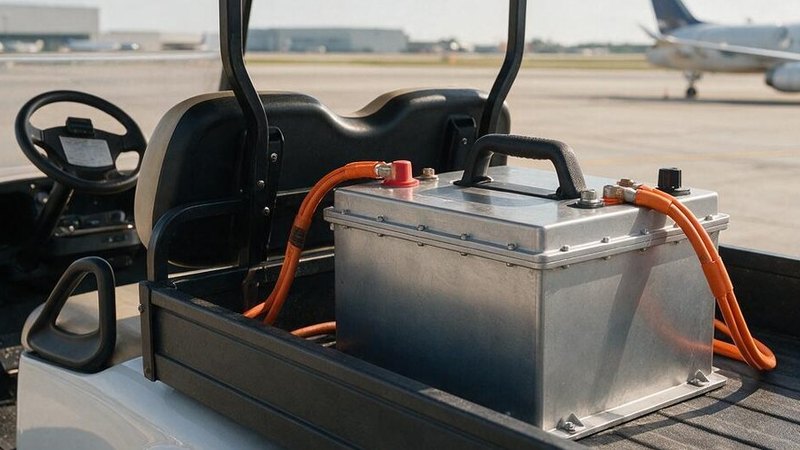
Professional Battery Solutions
+ —— = 24h Shifts + Double Power Consumption — Patrol Blind Spots = Security Liability
Patrol carts run 24h plus lights, radios, cameras, searchlights — 2-3x normal consumption. Lead-acid dies before shift ends — last 2 hours the cart is immobilized. Those 2 hours are patrol blind spots. Security operators report: the last 2 hours at night are the highest-risk period. If an accident occurs during blind spots, operators bear full legal liability.
Eliminate patrol blind spots = eliminate security legal liability. High-capacity 150Ah supports vehicle + all auxiliary equipment all day. BMS smart management prioritizes driving power. Last 2 hours operating normally — zero patrol blind spots. 24h.
| Lead-acid | PLB LiFePO₄ | |
|---|---|---|
| Shift endurance | Fails with added equipment | Vehicle and accessories for 24 hours |
| Patrol blind spots | Present | Eliminated |
| Liability | Patrol gaps | Covered |
| Last two hours | Voltage falls | Normal operation |
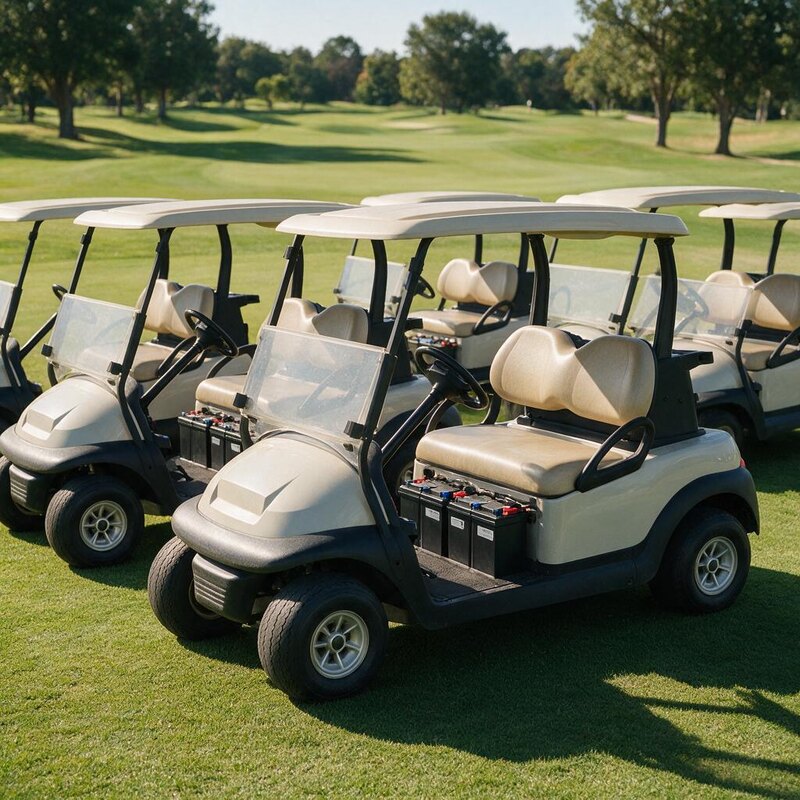
2 —— Only 2 Hours Between Shifts, Lead-Acid Can't Charge — Backup Battery Doubles Cost
The pain is specific: 2 —— Only 2 Hours Between Shifts, Lead-Acid Can't Charge — Backup Battery Doubles Cost In daily operation, lead-acid or manually managed packs lose capacity between scheduled checks, maintenance teams cannot inspect every unit, and the failure surfaces only when the load is already at risk.
Halve battery investment + reduce operating budget. PLB's LiFePO₄ pack and BMS monitor cell voltage, temperature and SOC continuously, alert before a weak cell becomes a failure, and are sized to the application's load profile.
| Conventional / manual | PLB LiFePO₄ | |
|---|---|---|
| Monitoring | Periodic checks | Continuous BMS |
| Fault warning | At failure | Threshold alerts |
| Maintenance | Scheduled visits | Exception-based |
| Service life | 2–3 years | 6,000+ cycles |
/ / —— Complex Wiring for Lights/Radios/Cameras — Multi-Output Panel Simplifies Operations
Auxiliary devices each need different connectors and voltages. Separate wiring is complex, risks overloading, hard to maintain. One wire issue paralyzes all auxiliary equipment. Security operators report: auxiliary wiring faults account for 40% of total patrol cart failures — each repair needs a professional electrician.
Reduce wiring faults by 80%+; significantly lower maintenance cost and complexity. Optional multi-output panel (USB/12V auxiliary/direct terminals) — one battery powers driving and all auxiliary devices. BMS circuit-level independent protection — single circuit overload doesn't affect others.
| Conventional | PLB multi-output panel | |
|---|---|---|
| Outputs | Single circuit | USB, 12V and terminal outputs |
| Circuit protection | None | Independent BMS protection per circuit |
| Wiring faults | 40% of failures | 80%+ lower |
| O&M complexity | High | Much simpler |
Security Zero Tolerance — How Does <0.1% Failure + Remote Monitoring Ensure Reliability?
Security patrols protect lives and property. Mid-patrol power loss = blind spot = security risk. Lead-acid failure rate 2-5%/year — in 100 patrol carts, 2-5 have battery issues annually. Command centers cannot remotely track each cart's battery status or proactively dispatch backup.
In 100 patrol carts, annual battery failures from 2-5 to <0.1 — near zero. Failure rate <0.1%, BMS smart SOC advance warning. Remote monitoring platform lets command center track every cart in real-time, proactively dispatch backup. Zero blind spots, zero interruption.
| Lead-acid | PLB monitored | |
|---|---|---|
| Failure rate | Higher | Under 0.1% |
| Failures per 100 carts a year | Several | Under 0.1 |
| Monitoring | None | Remote, proactive dispatch |
| Patrol continuity | Interrupted | Uninterrupted |
Solution Advantages
24h
24-Hour All-Day Range
150Ah covers the vehicle and its ancillary equipment for a full 24-hour shift, removing patrol blind spots and the liability that comes with them.
Round-the-clock patrol power · Normal operation to the end of shift2h
2h Fast Charge Full at Shift Change
Two hours of changeover charging fills the pack, so no spare batteries are needed: investment halves and takes under 10% of the operating budget.
One PLB equals two lead-acid sets · Lower cost overallMulti-Output Panel
Multi-Output Panel
USB, 12V and terminal outputs with independent BMS protection per circuit cut wiring faults by 80%+ and greatly simplify maintenance.
Simplified wiring · Much lower O&M complexity<0.1%
Failure Rate <0.1%
A failure rate under 0.1% means fewer than 0.1 cart failures a year per hundred, with remote monitoring for proactive dispatch and no patrol interruption.
No patrol interruption · Compliance assuredFrom Selection to After-Sales — PLB Stays With You
Four commitments that apply to every page in this category, from the first technical question to long-term support.

Technical Selection Support
Engineer recommends within 24 hours
Tell us the cart model, daily loops and terrain — our engineers size the pack and recommend the matching model within 24 hours.
Dedicated technical team · 24-hour response
OEM / ODM Customization
From cell to cabinet, fully customizable
From cells, BMS, housing and terminals to the nameplate, everything can be customized.
4–8 week customization · Tooling development supported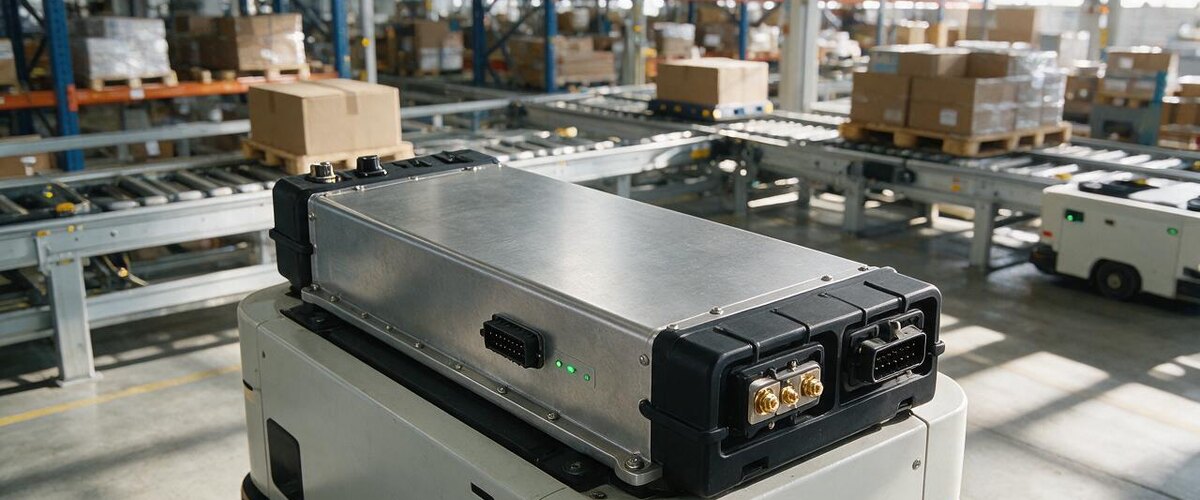
Global Shipping
Export to 100+ countries
Export-compliant packaging with UN 38.3 air transport certification and worldwide delivery.
UN 38.3 certified · MSDS available · Export compliant
Warranty & Support
Standard warranty, lifetime support
Standard products carry a full warranty, backed by lifetime technical support.
Warranty terms on request · Lifetime technical supportWhy Choose PLB?
Years of Manufacturing
Founded in Dongguan, China in 2014
Countries Served
Export-compliant packaging and worldwide delivery
Voltage Platforms
From 25.6V to 512V, built on the same cell platform
After-Sales Rate
Monitored by the internal quality traceability system
Full Range & Model Selection
Complete product range and model selection — standard fleet packs, long-range resort units, heavy-duty utility versions and airport ground-support models.
| Model | Voltage | Capacity | Form factor | Applications |
|---|---|---|---|---|
| LL-GC-36V60Ah | 36V | 60Ah | Entry fleet pack | Standard 2-seat carts |
| LL-GC-48V100Ah | 48V | 100Ah | 500A peak, 2 h charge | 18-hole course fleets |
| LL-GC-48V150Ah | 48V | 150Ah | All-day range under load | Resorts · sightseeing |
| LL-GC-48V120Ah-HD | 48V | 120Ah | Sustained 1C, heavy duty | Utility · cargo · climbing |
| LL-GC-48V100Ah-OW | 48V | 100Ah | Wide temperature | Outdoor · cold-climate sites |
| LL-GC-48V120Ah-AP | 48V | 120Ah | Airport GSE certified | Airport ground support |
By duty: standard 18-hole fleet → LL-GC-48V100Ah.
By site: cold-climate outdoor courses → wide-temperature version.
Not sure? Send us the cart model, daily loops and terrain — our engineers will size the pack directly.
Frequently Asked Questions
The questions course managers and fleet operators ask most about LiFePO₄ cart batteries in the Security & Patrol scenario — 24 h (patrol endurance), and what it takes to qualify.
Which pack fits the Security & Patrol cart already in service?
The pack replaces the lead-acid set in the original tray at the same system voltage with the same terminal layout, so the cart harness and charger connection carry over. Typical models for Security & Patrol builds are LL-GC-48V150Ah.
How much usable capacity does the pack deliver across a shift in Security & Patrol service?
The discharge curve varies by under 5% across the pack, so output at the end of a shift matches the first kilometer, and 1C charging refills a typical cart pack in about two hours. Key figure: 24 h (patrol endurance).
Will the pack survive Security & Patrol conditions for its full service life?
The sealed pack is rated for outdoor duty with BMS protection against over-current, over-temperature and deep discharge.
How does the pack connect to the charger and control system in the Security & Patrol scenario?
The BMS reports SOC and protection status, with an app or dash display option so drivers see remaining range.
Can the pack be customized for the Security & Patrol application and certification file?
Cells, BMS, housing, terminals and nameplate are customizable. Custom packs take 4–8 weeks including tooling. Tell us the cart model, daily loops and terrain — our engineers size the pack and recommend the matching model within 24 hours.
Need a Selection Recommendation?
Tell us the load, backup time and installation space — our engineers will recommend the matching battery within 24 hours.
NDA available upon request · Typical response within 12 hours